
Your eyes don’t usually “shout.”
They whisper first.
A gritty blink.
A burning edge at the end of a long screen day.
A little redness that makes you look tired even when you’re not.

Then one day you realize you’re thinking about your eyes too often.
During emails.
During reading.
During driving at night.
And you start asking the same question many adults over 40 ask: “Why do my eyes feel dry no matter what I do?”
Rate your eye irritation right now from 1–10.
How irritated do they feel in this exact moment?
Hold that number.
Because by the end of this article, you’ll know what aloe vera can realistically support, what it cannot, and the safest way to use it without risking your eyes.
Here’s the most important truth upfront: aloe gel should not be put directly into the eyes.
Not fresh gel.
Not diluted gel.
Not “a quick rinse.”
Eyes are delicate, and DIY experiments can backfire fast.
So why does aloe come up at all?
Because aloe has a real history in soothing skin and surface irritation, and it appears in some professionally formulated products designed for the eye area. That’s where the conversation becomes useful—and safe.
Why Dry, Red Eyes Become a Bigger Deal After 40

Many adults notice a shift around 40: more screen time discomfort, more redness, more sensitivity to wind, air conditioning, and contact lenses. It can feel unfair—like your body changed the rules without warning.
You may be thinking:
Is this just “getting older”?
Is it allergies?
Is it my contacts?
Is it menopause?
Is it my medication?
Why do drops help for five minutes and then the burn comes back?
Dry eye is often a multi-factor problem. Common contributors include reduced tear quality, faster tear evaporation, eyelid gland dysfunction, screen-related blinking changes, indoor air, certain medications, and inflammation on the surface of the eye.
And here’s what makes it exhausting: dry eye isn’t only “dry.”
It can cause watering, too.
Because irritated eyes sometimes overproduce reflex tears that don’t lubricate well.
So you feel dry and watery at the same time. Confusing, right?
Now let’s talk about aloe—what it can support, and where the line must be drawn.
Aloe Vera and Eye Comfort: What’s Plausible vs What’s Risky

Aloe vera contains water-rich gel and plant compounds that have been studied for soothing and inflammation-related effects on skin. That’s why aloe feels cooling and calming on a sunburn or irritated patch.
But your eye surface isn’t skin.
It’s a specialized tissue.
It reacts differently.
It has different risks: infection, abrasion, chemical irritation, and sensitivity that can escalate quickly.
So if you’re wondering, “Can aloe help my eyes?” the safest answer is:
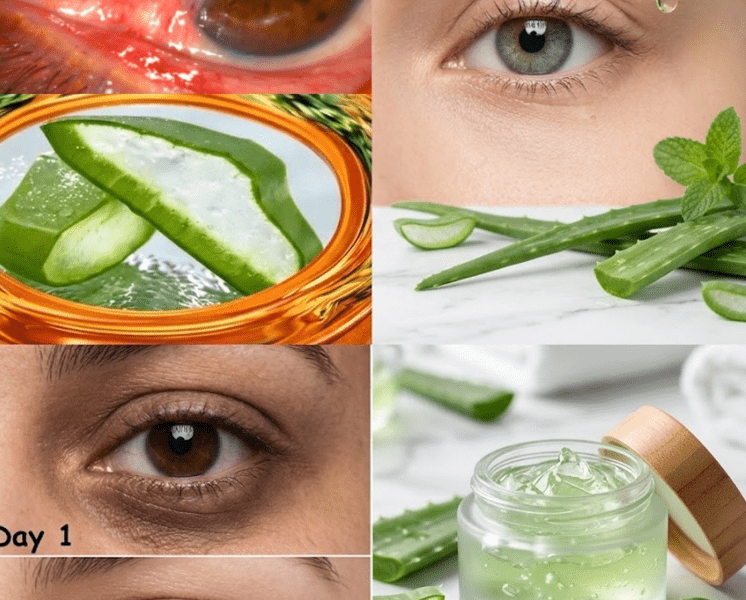
- Aloe may support comfort in the skin around the eyes when used in appropriate products
- Aloe may support overall wellness habits that indirectly help eye comfort (hydration, inflammation support)
- Aloe should not be placed directly in the eye unless it is part of a sterile, ophthalmic product designed for that purpose and cleared by your eye care professional
If that sounds like a buzzkill, I get it.
But it’s also the difference between a soothing routine and a painful mistake.
Now let’s cover the benefits people look for—using a safe, realistic frame.
Countdown: 9 Ways Aloe May Support Eye-Area Comfort and Daily Eye Wellness

Each benefit starts with a relatable situation and stays inside safe boundaries. This is not about miracle cures. It’s about practical support.
9) It can soothe the dry, crepey skin around your eyes (not your eye itself)
“Elaine,” 55, described the skin under her eyes as “paper-thin and tired.” She wasn’t just bothered by wrinkles—she felt tightness after cleansing. She tried a tiny amount of aloe-based gel moisturizer around the orbital bone (never on the lash line). Within a week, she felt less tightness and used less concealer because the area looked smoother. Was it “anti-aging magic”? No. It was hydration and comfort. And comfort reduces rubbing, which matters. How often do you rub your eyes without thinking? How much irritation comes from your hands, not your tears?
8) It may reduce the “hot” feeling of irritated eyelids after long screen days
If you’ve ever stepped away from the computer and realized your eyelids feel hot, heavy, or inflamed, you’re not alone. Prolonged screen time changes blinking patterns, which can worsen dryness. Some people find that a cool compress helps. If you use aloe, the safest approach is aloe on the skin outside the eye, not the eye surface. A chilled, clean compress over closed lids can feel calming. Would you rather chase stronger drops, or improve the environment causing the irritation? And here’s the next surprise: sometimes the problem is not your eyeball—it’s your eyelids.
7) It can support a “less puffy” look when used as part of a cooling routine

Puffiness can make eyes feel heavy and look tired. “Tom,” 47, noticed his eyes looked swollen on mornings after poor sleep and salty dinners. He used a chilled eye-area gel (aloe-based) and a cold compress for 2–3 minutes. He didn’t claim his dry eye was cured. He said he looked more rested and felt less urge to rub his lids. That matters because rubbing can worsen irritation and redness. Do you wake up puffy often? Is it sleep, salt, stress, or screens before bed? What happens if you change just one of those?
6) It may support barrier comfort for eyelid skin prone to irritation
Eyelid skin is thin and reactive. Strong products—fragrance, harsh acids, aggressive makeup removers—can inflame the area. Aloe is often included in gentle formulations because it can feel soothing on skin. If your eyelids feel irritated, simplifying your routine may help more than adding more products. Aloe can be part of that simplification if it’s in a well-formulated, fragrance-free eye-area product. Are you using multiple actives near the eye? Are you removing mascara too aggressively? Could your irritation be coming from products, not your eyes?
5) It may help you break the eye-rubbing cycle that makes redness worse
This is a big one. Redness and dryness often worsen because of rubbing. Rubbing triggers more inflammation, which makes eyes feel itchier, which leads to more rubbing. Aloe can help on the skin around the eyes by increasing comfort so you’re less tempted to touch. But the real win is behavioral: replacing rubbing with safer steps like compresses, preservative-free tears, and blinking breaks. Have you noticed you rub more when you’re stressed? Do you rub during screen work? What if the fastest improvement is changing your reflex, not adding another bottle?
4) It may support overall hydration habits that influence eye comfort indirectly
Dry eye isn’t only local. Hydration status, sleep, and diet can influence how your eyes feel. Some people use aloe drinks designed for ingestion as part of a hydration routine. That doesn’t mean aloe drink treats dry eye. It means hydration habits can reduce the “dry system” feeling some people experience. If you’re dehydrated, your tear film can feel less stable. Could your afternoon eye burn be a sign you haven’t had enough water? Are you drinking mostly coffee and tea? Do you feel worse in air-conditioned rooms? The next benefit connects to inflammation support more broadly.
3) It may support a calmer inflammation environment through lifestyle consistency
Aloe is often discussed for anti-inflammatory potential in wellness contexts, but your eyes respond best to proven basics: blinking, lid hygiene, tear support, reduced irritants, and proper evaluation when needed. Where aloe can help is as part of a calming routine that reduces overall irritation—especially if you stop overusing harsh cleansers or fragranced creams near the eyes. “Sandra,” 50, simplified her products and added a gentle aloe-based moisturizer to the eye area. Her biggest change was fewer flare-ups from irritation. Are your symptoms steady or episodic? Do they spike with new products, pollen, or screen marathons?
2) It can be a “gateway habit” that makes you take eye comfort seriously
This might sound emotional, but it’s real. People often ignore eye discomfort until it becomes disruptive. A small ritual—cool compress, gentle moisturizer, hydration—can make you pay attention early. Paying attention leads to action: adjusting screen settings, using preservative-free tears, cleaning eyelids properly, and finally scheduling an eye exam. A plant isn’t the hero. Your consistency is. Have you been “pushing through” for months? Are you normalizing discomfort that deserves care? What would change if you treated your eyes like a priority?
1) The biggest benefit: aloe can support the eye-area routine that prevents escalation
The true “win” isn’t aloe curing dry eye. It’s aloe helping you build a safer routine that reduces triggers. That routine might include: managing screen breaks, improving indoor humidity, avoiding harsh products, using compresses, and getting professional guidance. Aloe can be part of the skin-comfort side of that plan, not the eye-surface side. If your eyes are constantly irritated, the goal is fewer flare days. Fewer flare days mean better productivity, safer driving, and better mood. Would you rather keep treating symptoms randomly, or follow a plan you can measure?
Now, let’s make the plan concrete and safe.
What You Should Never Do With Aloe and Your Eyes
These are common internet recommendations that can increase risk:
- Do not put fresh aloe gel into your eye
- Do not “dilute aloe gel” and use it as eye drops
- Do not rinse the eye with aloe water
- Do not apply any non-sterile gel to the lash line
- Do not experiment if you have contact lenses in, an eye infection, or corneal damage
If your eyes are red, painful, light-sensitive, producing discharge, or your vision is blurred, seek prompt professional evaluation. Those symptoms can signal conditions that require medical treatment.
How to Use Aloe Safely for Eye-Area Comfort
If you choose to use aloe, stay on the “skin side,” not the “eye side.”
Safe-ish options many people tolerate:
- A fragrance-free, reputable eye-area moisturizer that includes aloe
- A small amount of aloe gel used around the orbital bone only, never on the lash line
- Chilled compresses over closed eyes (with clean materials)
Always patch test on the inner arm first. Eyelid skin is sensitive.
Table 1: Common Eye Complaints and Safer Support Options
| Problem you feel | Common mistake | Safer support strategy | Where aloe may fit |
|---|---|---|---|
| Dry, gritty sensation | Rubbing eyes | Preservative-free tears + blinking breaks | Aloe can support eyelid skin comfort |
| Redness | Using harsh DIY rinses | Identify triggers + compresses | Aloe in eye-area skincare only |
| Puffiness | Strong actives near eyes | Cold compress + sleep + salt moderation | Aloe-based eye gel for skin only |
| Burning after screens | Staring without blinking | 20-20-20 rule + screen adjustments | Aloe can reduce eye-area skin irritation |
| Contact lens discomfort | Overwearing lenses | Lens hygiene + optometrist evaluation | Aloe should not touch lens area |
Table 2: Use and Safety Guide
| Situation | What to do first | Aloe role (if any) | When to see a professional |
|---|---|---|---|
| Mild dryness after screens | Preservative-free tears + blink breaks | Eye-area skin comfort only | If symptoms persist beyond 2–4 weeks |
| Seasonal itchiness | Allergy plan + avoid rubbing | Eye-area gel for comfort | If swelling, pain, or vision changes |
| New severe redness | Stop contacts + evaluate | Avoid aloe | Same day if pain/light sensitivity |
| Morning puffiness | Cold compress + hydration | Optional aloe eye gel | If swelling is persistent or one-sided |
| Chronic daily symptoms | Comprehensive plan + exam | Secondary support | If daily symptoms affect life |
Two Case Studies: Realistic Outcomes Without Risky DIY
Case Study 1: Sarah, 42, teacher with red eyes from screens
Sarah graded on a laptop for hours nightly. She used preserved drops multiple times a day and felt worse by evening. She made three changes: preservative-free tears, a blinking timer, and a simple aloe-containing eye-area moisturizer to reduce skin tightness that made her rub. Within two weeks, she reported fewer flare nights. She didn’t claim her dry eye disappeared. She said it stopped controlling her evenings.
Case Study 2: Mike, 38, engineer with contact lens irritation
Mike’s eyes burned after long meetings. He thought the answer was stronger drops. Instead, his optometrist recommended lens breaks, lid hygiene, and better tear support. Mike used a cool compress after work and avoided irritating skincare near the eyes. Aloe played a small role: a gentle moisturizer around the eyes so he stopped rubbing dry eyelids. His biggest improvement came from changing the cause, not chasing a “cure.”
Now let’s give you a simple daily routine you can actually follow.
A Safe 7-Day Eye Comfort Reset Plan
This is not medical treatment. It’s a habit reset. If symptoms are severe, see a professional.
Day 1–2
- Switch to preservative-free artificial tears if you use drops often
- Do the 20-20-20 rule: every 20 minutes, look 20 feet away for 20 seconds
- Hydrate earlier in the day
Day 3–4
- Add a clean warm compress for 5–8 minutes (helps eyelid oil glands for many people)
- Follow with gentle eyelid hygiene if recommended by your eye care professional
- If desired, use a gentle aloe-containing moisturizer around the orbital bone only
Day 5–7
- Reduce evening screen time or use screen filters
- Use a humidifier at night if your room is dry
- Track your irritation score each evening (1–10)
Most people are shocked by one thing: small changes stack. And the stacking is what creates relief.
Three Bullet Lists to Make This Easy
Signs your routine is helping
- Less urge to rub your eyes
- Less “grit” during blinking
- More stable comfort during screen time
- Less end-of-day redness
- Better contact lens tolerance (if you wear them)
Common mistakes that keep you stuck
- Using non-sterile DIY mixtures in or near the eye
- Overusing preserved drops
- Wearing contacts too long
- Ignoring eyelid hygiene when glands are involved
- Treating dryness without changing screen habits
Simple upgrades that often multiply results
- Blink reminders during computer work
- Wraparound glasses outdoors (wind protection)
- Sleep and hydration consistency
- Limiting fragranced products near eyes
- Asking about dry eye evaluation if symptoms are frequent
The Bottom Line: Aloe Can Support Comfort—But Only in the Right Place
Aloe vera may support comfort for the skin around the eyes and help reduce the rubbing and irritation loop that worsens redness. It may also support hydration-focused routines that indirectly help eye comfort. But aloe gel should not be placed directly in the eyes, and DIY “aloe eye drops” are not a safe idea.
If your eyes are persistently red, dry, or irritated, the most effective path is usually a combination of environmental changes, safe tear support, eyelid care, and professional evaluation. Aloe can be a small, supportive piece of that plan—on the skin, not in the eye.
Now go back to your irritation rating from the beginning. Even a one-point improvement matters. It means your eyes are responding to your choices.
P.S. If you take one step today, make it this: stop rubbing, switch to preservative-free tears if you use drops frequently, and set a blinking reminder during screen time. Your eyes often improve fastest when you remove the daily trigger.
This article is for informational purposes only and does not replace professional medical advice — readers are encouraged to consult a qualified healthcare provider for personalized guidance.