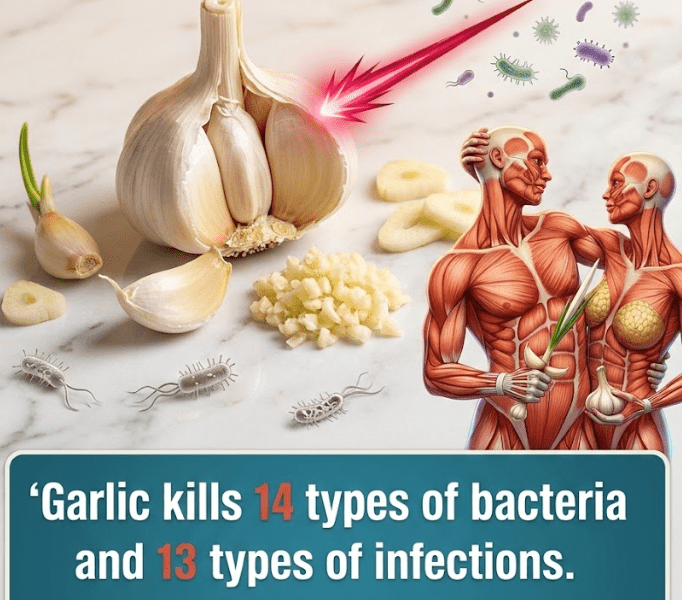

Have you ever crushed a clove of garlic and noticed that sharp, almost spicy aroma filling the kitchen? That scent isn’t just flavor. It’s chemistry at work. And according to viral posts online, it’s powerful enough to “kill 14 types of bacteria and 13 types of infections.” Sounds impressive, right?

But is it true? Or is it another health claim that grew stronger with every share?
If you’re over 40 and finding that colds linger longer, digestion feels unpredictable, or recovery takes more out of you than it used to, you’re not alone. Many adults quietly wonder: Is there something simple I can do daily to support my immune system without over-relying on medications?
Garlic keeps showing up in that conversation. And what the science actually says may surprise you.
Let’s unpack it carefully, because the truth is more interesting than the headline.
Why Everyday Infections Feel Harder After 40
You might not think about your immune system much—until it slows down.
As we age, immune responsiveness can gradually decline. Minor sinus congestion may stretch into weeks. A simple stomach bug may leave you fatigued longer than expected. Have you noticed that recovery doesn’t bounce back the way it did at 25?
Antibiotics remain lifesaving tools. But rising antibiotic resistance has made certain bacterial strains harder to treat. That reality leaves many adults asking: Is there a supportive, food-based way to strengthen resilience?
Vitamin C? Helpful, yes. Probiotics? Often beneficial. But what if there’s a kitchen ingredient that works differently—targeting microbes directly while also interacting with immune signaling?
This is where garlic enters the picture. And the mechanism behind it matters more than the viral numbers.
The Truth Behind “14 Bacteria and 13 Infections”

You’ve probably seen the claim repeated word for word. But here’s the important detail: there is no major scientific study that identifies exactly “14 bacteria and 13 infections” in that precise way.
So where did it come from?
Early laboratory research tested garlic extracts against multiple strains of bacteria—sometimes 10, 12, or 15 types in a single experiment. Those lab findings likely evolved into simplified online claims.
The real star compound is allicin. Allicin forms when fresh garlic is crushed or chopped. It reacts with thiol groups in microbial enzymes, interfering with their energy production and replication.
Laboratory studies show activity against bacteria such as:
• Escherichia coli
• Staphylococcus aureus, including resistant strains
• Salmonella
• Helicobacter pylori
• Certain Candida species
That sounds powerful. But here’s the nuance.
Activity in a petri dish does not automatically mean garlic “cures” infections inside the human body. It suggests potential antimicrobial support. That distinction is crucial—and often overlooked online.
But that’s only the beginning of what makes garlic interesting.
9 Ways Garlic May Support Your Health (Backed by Research)

Instead of focusing on a viral number, let’s look at what research actually suggests—one benefit at a time.
9. Antibacterial Activity in Lab Studies
Mark, 57, remembers reading about garlic after dealing with recurring digestive discomfort. “I didn’t want another round of antibiotics if I could help it,” he said.
Research suggests garlic extracts may inhibit both Gram-positive and Gram-negative bacteria in laboratory settings. That broad-spectrum activity makes scientists curious.
Could regular dietary intake influence microbial balance? It’s still being studied. But the lab findings opened the door.
And what happens when bacteria form protective layers? That leads us to something even more intriguing.
8. Possible Biofilm Disruption
Bacteria sometimes create biofilms—protective shields that make them harder to eliminate.
Some experimental studies suggest garlic compounds may weaken these biofilms. Imagine loosening armor rather than attacking head-on.
That doesn’t mean garlic replaces medical treatment. But it hints at supportive potential.
And if biofilms are part of the story, resistant strains are next.
7. Activity Against Resistant Strains

Antibiotic resistance is one of the most pressing global health concerns.
Lab studies show garlic extracts demonstrating activity against certain multidrug-resistant strains, including MRSA.
You may be thinking: Does that mean I should treat infections with garlic alone? Absolutely not.
But it does suggest garlic’s multi-target mechanism differs from single-pathway antibiotics. That distinction matters.
And microbes aren’t the only part of the equation.
6. Immune Modulation
Sarah, 42, a teacher and mother of two, began adding crushed raw garlic to her salads daily. She described feeling “steadier” during cold season.
Some studies suggest garlic may influence immune cell activity, potentially enhancing natural defense mechanisms.
It’s not just about killing microbes—it’s about helping your body respond efficiently.
But immune health connects deeply to inflammation.
5. Anti-Inflammatory Effects
Chronic low-grade inflammation can make recovery feel slower and energy lower.
Garlic’s sulfur compounds may support balanced inflammatory signaling.
Imagine reducing the background “noise” in your system so recovery feels smoother.
And inflammation often begins in the gut.
4. Digestive Balance Support
Your gut hosts trillions of microorganisms. Balance is key.
Research suggests garlic may inhibit harmful bacteria while allowing beneficial strains to coexist.
Could that explain why some people notice improved digestive comfort?
Perhaps. But here’s something even more unexpected.
3. Antifungal Potential
Candida overgrowth is commonly discussed, though often misunderstood.
Laboratory models show garlic extracts demonstrating antifungal properties.
Again, not a cure—but a potential supportive factor.
And viruses? The story gets more complex.
2. Antiviral Indications
Some preliminary studies suggest garlic compounds may interfere with certain viral processes.
Does that mean garlic prevents colds? Evidence isn’t strong enough to say that.
But it suggests broader biological activity beyond bacteria alone.
And now, the benefit that surprises many adults over 45.
1. Cardiovascular Support With Microbial Synergy
Garlic is well-known for supporting cardiovascular health—helping maintain healthy blood pressure and circulation in some individuals.
Why does that matter in an infection discussion?
Healthy circulation supports immune delivery throughout the body.
Better blood flow means immune cells reach tissues efficiently.
It’s not dramatic. It’s foundational. And sometimes foundational changes are the most powerful.
But knowing the benefits isn’t enough. How you use garlic makes all the difference.
Fresh Garlic vs. Common Alternatives
| Aspect | Fresh Crushed Garlic | Antibiotics | Probiotics |
|---|---|---|---|
| Spectrum | Broad lab activity (bacteria, fungi, some viruses) | Targeted bacteria | Supports beneficial gut bacteria |
| Resistance Risk | Low multi-target action | Can increase resistance | Low |
| Side Effects | Odor, possible stomach upset | Digestive issues, resistance | Usually mild |
| Accessibility | Grocery store staple | Prescription required | Supplements |
| Cost | Low | Moderate to high | Moderate |
Garlic isn’t a replacement. It’s a complementary option many overlook.
So how do you actually use it safely?
How to Use Garlic for Maximum Potential
Allicin forms only after garlic is crushed or chopped.
That means swallowing whole cloves may not deliver the same benefit.
Here’s a practical guide:
| Step | What To Do | Why It Matters | Safety Note |
|---|---|---|---|
| 1 | Crush or chop fresh garlic | Activates allicin | Strong taste; start small |
| 2 | Let sit 10 minutes | Maximizes compound formation | Don’t skip this step |
| 3 | Add to food raw or lightly cooked | Preserves active compounds | Cooking reduces potency |
| 4 | Begin with 1 clove daily | Allows adaptation | Watch for stomach discomfort |
| 5 | Increase gradually to 2–3 cloves | Consistency matters | Consult provider if on blood thinners |
You may be wondering about odor.
Yes, breath changes. Many people mix crushed garlic with honey or add it to olive oil dressings.
Small adjustments make it sustainable.
A Realistic Timeline
Week 1–2: Start with one crushed clove daily.
Week 3–4: Increase to two if tolerated.
After one month: Notice patterns. Energy? Fewer minor issues?
Keep a simple journal. Awareness matters.
Remember that quick results aren’t the goal. Consistency is.
And if you’re skeptical, that’s healthy.
Garlic is not magic. It’s a food with biologically active compounds.
But daily habits compound over time.
Before You Dive In
Garlic may not be appropriate for everyone.
It can interact with blood thinners and may increase bleeding risk. Some individuals experience heartburn or digestive irritation.
If you have a medical condition, are pregnant, or take medications, speak with your healthcare provider before making changes.
Supportive does not mean substitute.
The goal is informed integration—not replacement.
The Bigger Takeaway
So, does garlic kill 14 bacteria and 13 infections?
There’s no precise scientific proof of that exact number.
But laboratory research supports broad antimicrobial activity, immune interaction, and additional cardiovascular and anti-inflammatory benefits.
Instead of chasing viral headlines, focus on what’s sustainable.
Three key reminders:
Garlic contains allicin, which shows broad antimicrobial activity in lab settings.
Consistent fresh use may support immune and digestive balance.
It complements—but does not replace—medical care.
Now imagine 30 days from today.
What if you felt slightly more resilient during cold season? Slightly steadier in digestion? Slightly more proactive about your health?
Sometimes transformation isn’t dramatic. It’s incremental.
Crush. Wait. Add. Repeat.
And pay attention.
Because the most overlooked health tools are often sitting quietly in your kitchen.
If this gave you clarity, consider sharing it with someone who might appreciate a science-based perspective instead of viral hype.
Your future self may thank you for starting small today.
This article is for informational purposes only and does not replace professional medical advice — readers are advised to consult their healthcare provider for individual guidance.